

Welcome to the interior design business: a world where creativity meets commerce, and where the beauty of a space is only as sustainable as the business model behind it.
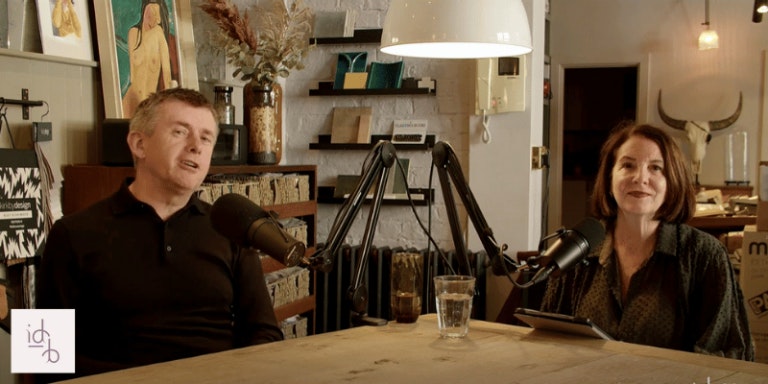
In a recent episode of The Interior Design Business podcast, hosts Jeff Hayward and Susie Rumbold, addressed a constant challenge: how designers can charge fairly, manage scope creep, and ensure they’re paid for the value they deliver.
They were joined by two leading figures in the industry: Anna Burles of Run for the Hills and Andrea Benedettini of Andrea Benedettini Interiors. Together, they shared practical insights into fee structuring, client communication, and building a resilient design business. Here are just a few of the key pointers from an episode packed with great advice.
The Fee Conundrum: No One-Size-Fits-All
If there’s one constant in design, it’s that no two projects or clients are ever the same.
As Anna explains, there’s no single way to charge. “We’re in a constant cycle of changing the way we do our fees.” From fixed rates to retainers and hybrid models, designers must remain flexible.
Andrea favours a more structured method, producing detailed fee proposals that outline each service from concept to completion. “It’s sometimes eight or nine pages long,” he says. “We go through it with the client to make sure they understand what’s included and what isn’t.”
Transparency is key, especially when clients don’t fully understand the time and complexity involved in each stage.
Reading Between the Lines
Before quoting fees, it’s crucial to understand what the client really wants - something that often isn’t clearly articulated. “Our job is to read people’s minds,” Andrea says. Chemistry calls, discovery meetings and site visits all help build trust and reveal the real brief.
Anna also uses drawing packs to show different levels of detail, helping clients see how their choices impact fees. “A picture speaks a thousand words,” she says. “It helps them decide whether they want a sketch-level design or a full working drawing.”
Tackling Scope Creep
Scope creep - when a project expands without an increase in fees - is one of the biggest threats to profitability. Setting boundaries early is essential. “We allow two rounds of revisions per phase,” says Andrea. “Anything beyond that is chargeable.”
Even small changes can create knock-on effects. “A tweak to a floor plan can impact joinery drawings, lighting layouts, and procurement schedules,” Anna explains. She prefers using the word “frozen” rather than “approved” to signal when an element is locked. It makes it clear that further changes will be treated as new work.
Procurement: Clarity Over Chaos
Procurement is another area where clear boundaries matter. While some clients want to take this on themselves, Anna warns this can lead to delays and confusion. “Procurement is complex and needs methodical organisation. If a client or their PA tries to do it, it often ends in chaos.”
Both designers include procurement terms in their contracts and charge a service fee for managing orders, deliveries and installations. They also manage communication carefully: WhatsApp is fine for quick updates, but formal decisions are kept to email.
Getting Paid
Cash flow is the lifeblood of any business, and design is no different. Andrea admits that he’s become a “professional chaser”, following up on unpaid invoices and applying interest where needed.
Anna, drawing on her agency background, insists on deposits and staged invoicing. “No project starts without a deposit. We don’t mobilise until we’re in the money.” It’s a practical approach that ensures the business isn’t exposed.
Emotional Intelligence Matters
Beyond contracts and spreadsheets, a successful design business also relies on emotional intelligence. “You have to trust your instincts,” says Anna. “If something feels off in the chemistry meeting, it probably is.”
Andrea agrees. “Imposter syndrome is real, but you are a professional with expertise. Own it.” Open, honest communication, especially when things go wrong, builds long-term trust with clients.
Flexibility, with Boundaries
Adaptability is important, but structure keeps projects on track. Andrea uses timesheets and weekly programme reviews. Anna relies on time-tracking software to spot where time is being lost and adjust accordingly.
They also offer flexible entry points, such as feasibility studies or phased services. “Sometimes it’s better to start small and build trust,” says Anna. “It’s less daunting for the client and gives you a chance to prove your value.”
Final Thoughts
Interior design is a creative and personal profession, but it’s also a business. To thrive, designers must strike a balance between artistry and accountability. That means charging fairly, managing time, setting boundaries and valuing their own contribution.
As Anna says, “We’re not just designing spaces. We’re designing value.” And that value should be recognised, respected and paid for.
You can watch the full podcast episode on this topic by clicking this link:
https://bit.ly/4fpNLIs.
We also urge you to visit the Talks Theatre at Decorex and to network with your peers at the show where you can immerse yourself in the world of interior design and find answers to this issue and many others faced by the designers today.
We look forward to seeing you there!
Are there any specific design trends you followed or avoided?
I tend to try to ignore trends completely as design ought to be timeless rather than trend led. I was offered some bobbin chairs (actually rather beautiful ones with the proper elongated bobbin design) that I chose not to use as I think Instagram is rather oversaturated with bobbins at the moment.
What are you most looking forward to at Decorex 2025?
Outside of the actual process of the installation of the main bar (I’m a logistics nerd), I can’t wait to see Tolu’s VIP lounge which sounds brilliant, and also, I always love seeing the craftspeople in the ‘Making Spaces’ area.


